.png)
-min.jpg)

The afternoon opened with a reassurance. Professor Koh reminded the room that employment rates coming out of HKUST Business School remain strong, even as conversations around AI grow louder. It was a grounding note before diving into less certain territory.
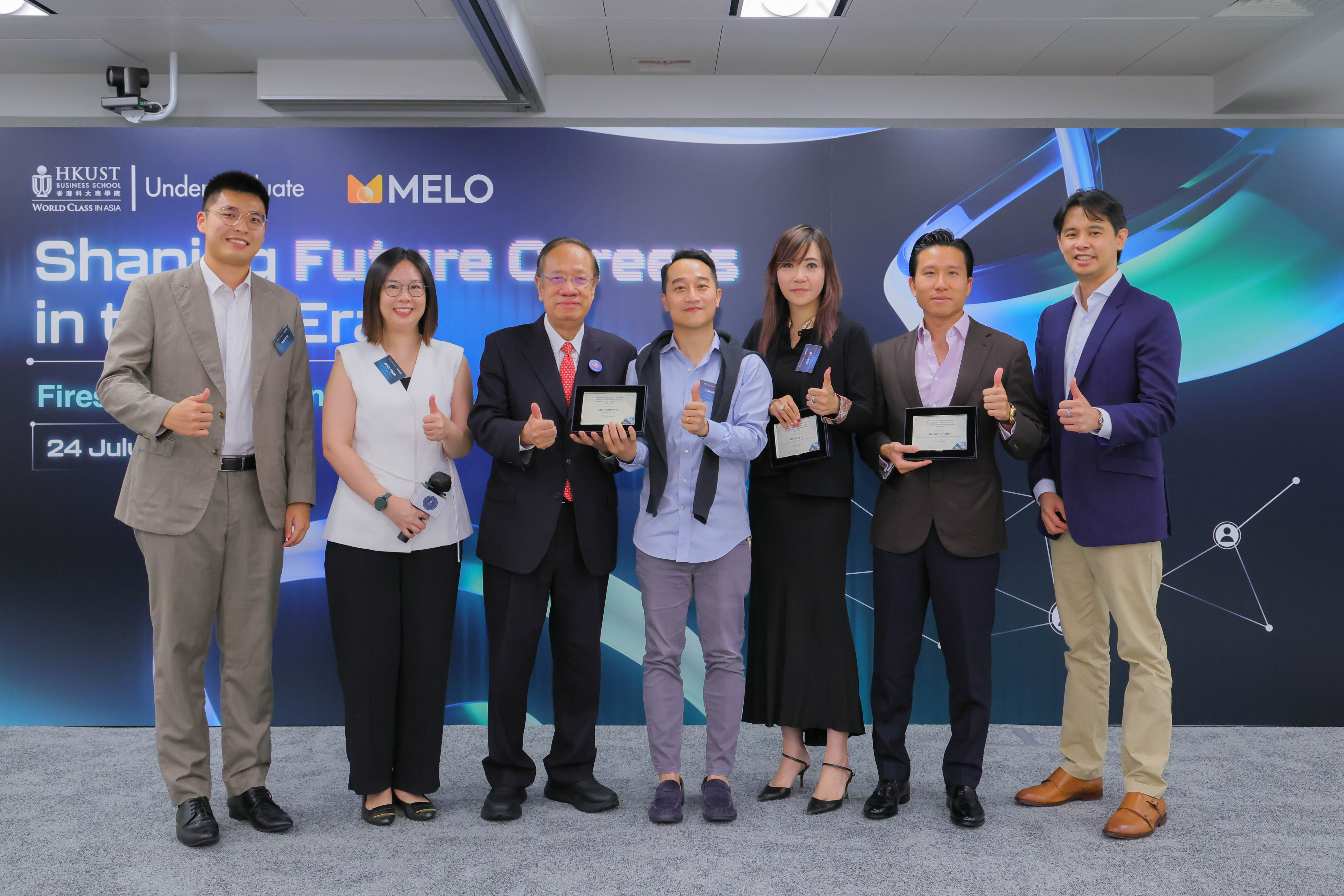
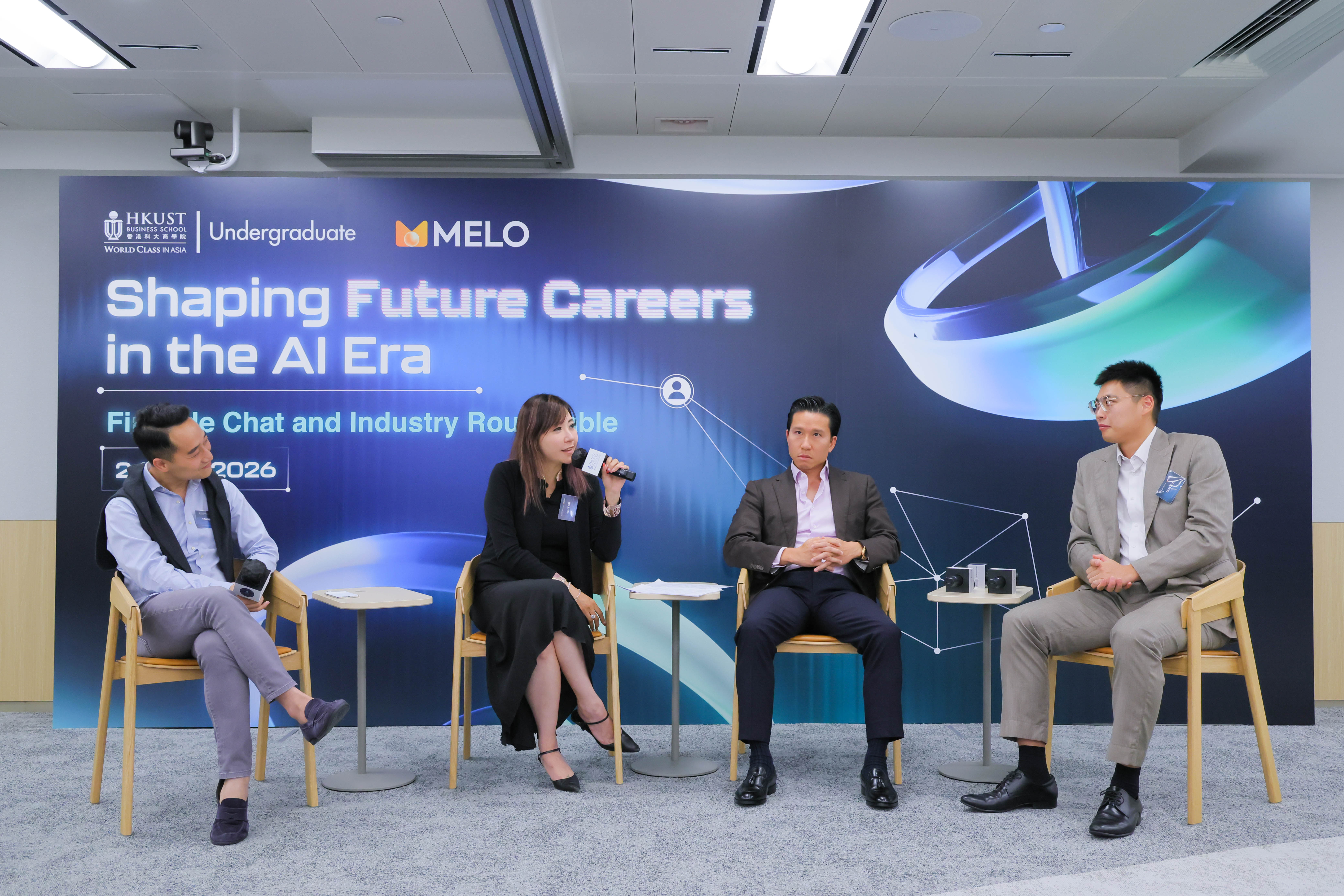
Travis, moderating for Melo Social, framed the fireside chat around two angles: how AI will shape career outlook, and how AI will shape the future more broadly. Joining him were Tommie Lo, founder and CEO of Preface; Nelly Pai, who leads J.P. Morgan's HKIPO and Corporate Finance Group; and Arthur Shek, Managing Partner at McKinsey Hong Kong and co-founder of Project Melo.
Nelly spoke about how banking has built its own AI tools internally, not to replace analysts but to compress the hours spent gathering financials and research before human judgment takes over. Tommie described AI less as a chatbot and more as workflow, insisting that AI adoption is not a technical problem but an organizational one. Leaders, he argued, still need to bring the right people into the room for it to work at all.
Arthur offered the line that anchored the whole discussion: the reality is by far not as drastic as the description suggests. Only a small fraction of companies have meaningfully restructured how they operate because of AI. Most are still experimenting, still asking what real productivity gain looks like rather than which model performs best.
Tommie extended this to entrepreneurship. The idea of a single founder running an entire startup with AI agents sounds compelling, but no one in the room could point to a convincing example yet. Perseverance and human judgment, it seems, remain stubbornly unautomated.
Listening to all three, I found myself asking a much smaller question than the ones on stage: should students right now be sharpening their AI workflow skills, or going deeper into a specific industry's expertise first? Perhaps that tension is exactly what this moment is asking us to sit with.
— Gordon Lee