.png)
-min.jpg)

1. What is one thing you learned here that you’d want to bring back and share with other Melo members?
Hynton: What struck me most was our field trip to Hangzhou, especially how deliberately Qingshan Village was managed as a community. Within a decade it drew in over 100 “new villagers” and nearly 60 organisations spanning art, design, ecology, and hospitality, while local residents came home to run the operations themselves through a proper village collective company. Nature conservation and art/design work as two clear pillars, and the whole structure is built to bond old and new residents together rather than let outsiders and locals stay parallel. What I learned is that sustainability isn’t just an environmental outcome; it’s an organisational design problem, and worth studying with the same rigour we’d give any other system.
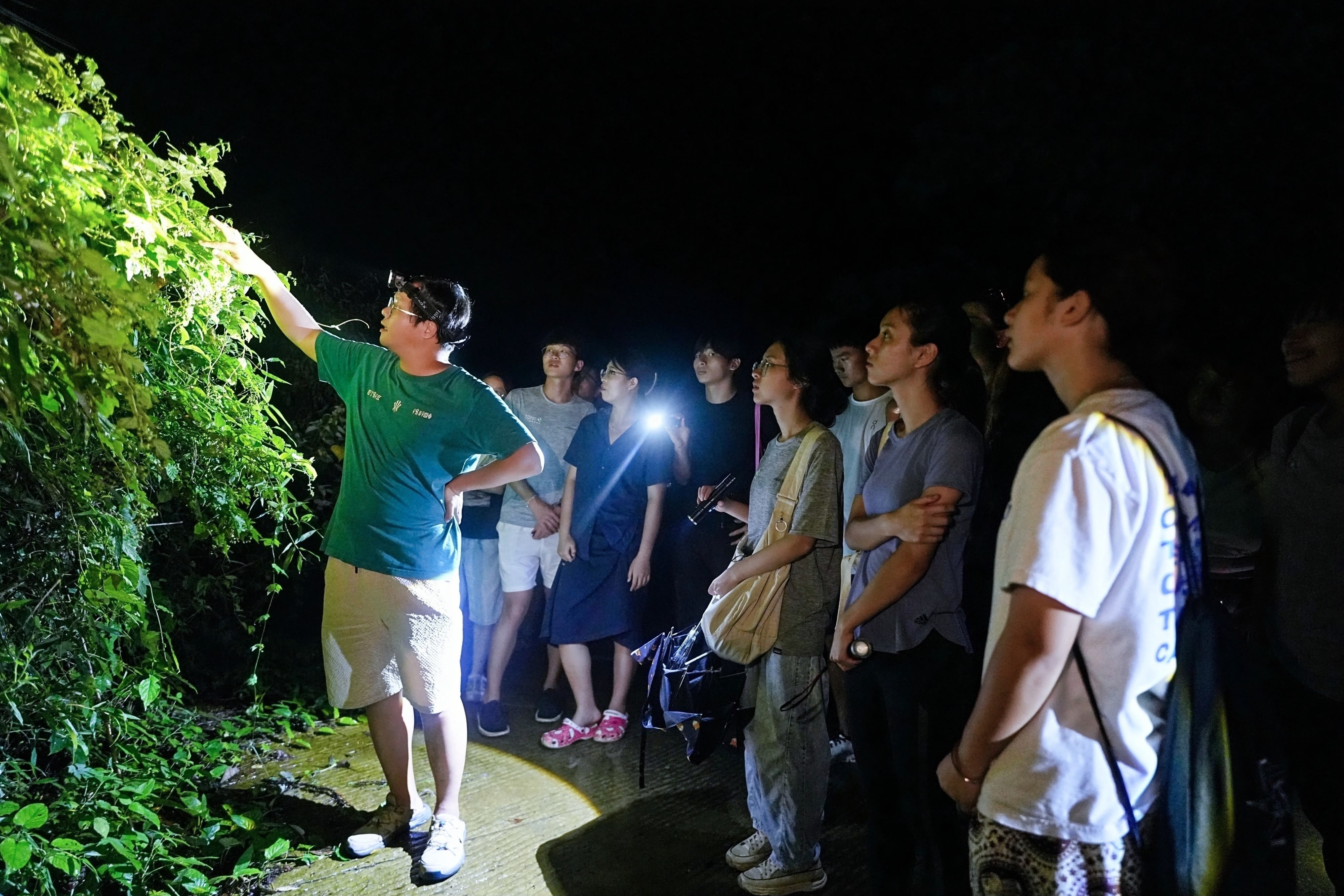
Lilith: Respecting and protecting nature starts with observation. Exploring Hangzhou’s nocturnal wildlife on a night safari, alongside studying horseshoe crabs and oyster sustainability in Hong Kong, showed me that rich biodiversity is all around us. What I want to share with Melo is that protecting nature isn't an abstract concept; it begins with actively paying attention to our local habitats.
.jpeg)
2. Describe one skill or piece of knowledge you picked up during the scientific surveys or habitat mapping sessions.
Hynton: The surveys track how an endangered species that’s outlasted hundreds of millions of years is faring today, so conservationists know where to focus protection before it’s too late. Learning the method itself — counting juveniles along transects, logging GPS points, measuring each one to track age, showed me how conservation actually works day to day. Patient, methodical data collection under a punishing summer sun, since that’s exactly when the crabs emerge. What stayed with me even more was the team doing it, out there fully committed regardless of what the count would be, because for an endangered species that’s outlasted hundreds of millions of years, every data point matters.
Lilith: I learned to read the "hidden signatures" of wildlife. Because horseshoe crabs hide under the sand, we had to spot their subtle tracks and surface depressions rather than the animal itself. Combined with learning how field scientists map biodiversity, I realised how much patience is needed for ecological fieldwork.
.jpeg)
.jpeg)
3. What was the most memorable moment, whether in Hong Kong’s mudflats or Hangzhou’s wetlands?
Hynton: What I’ll remember most is definitely the people I talked to and learn from. Victoria, working on resource development at TNC. 康老師, founding member of the Water Fund and experienced NGO and service practitioner. 海江老師, running the Water Fund and Qingshan Town’s enterprise company, who showed us the Qingshan story firsthand. Getting that much direct access to the people actually behind the work was the real privilege of the trip. It wasn’t a lecture about conservation, it was three people who’d actually done the thing, willing to talk to us like peers.
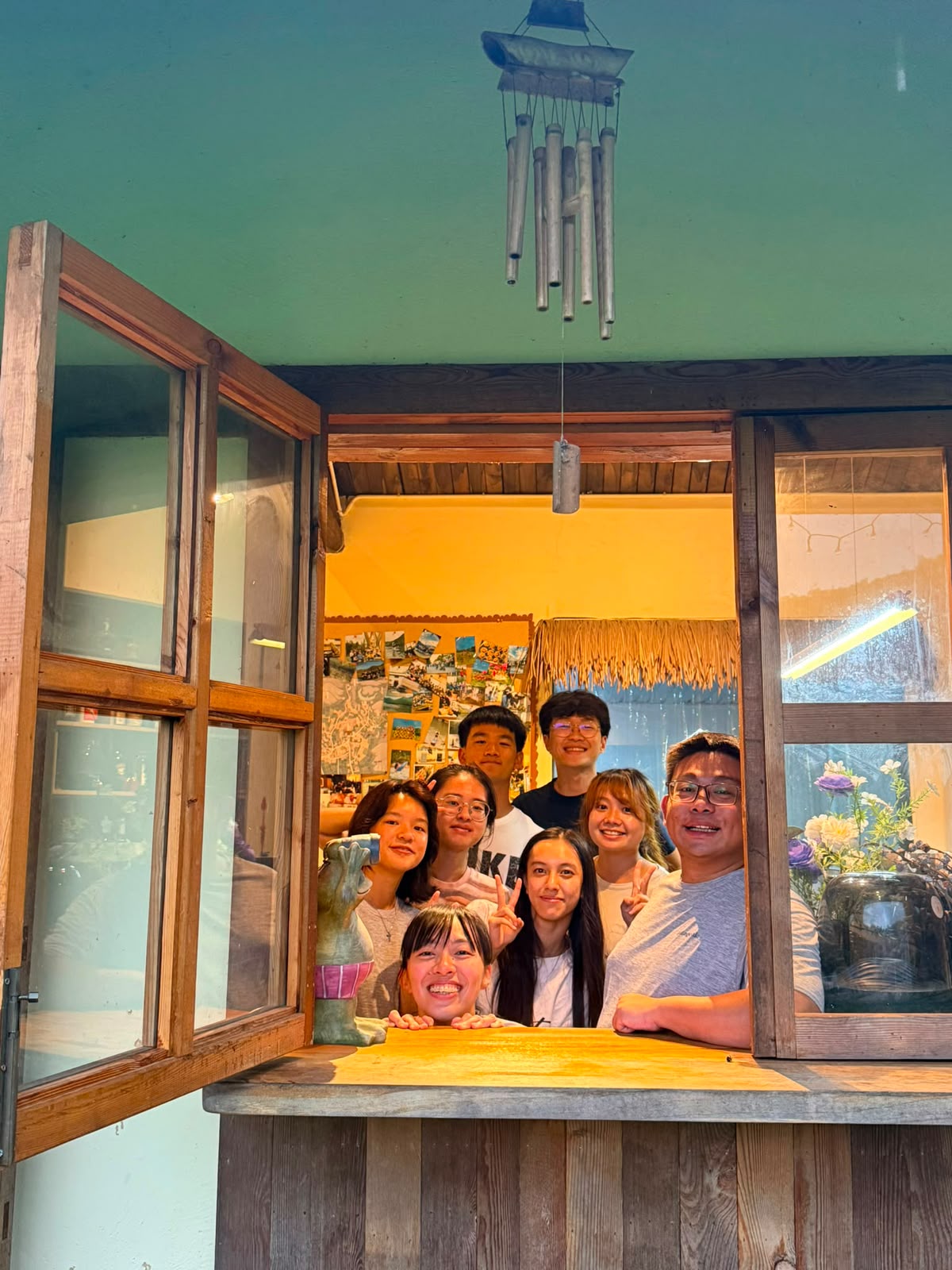
Lilith: My most memorable experience in the trip was discovering the unique community and culture of Qingshan Village (青山村). I was fascinated by its rich art scene and seeing young creators moving back to the countryside. Seeing TNC’s conservation efforts work alongside community revitalisation proved that environmental protection is most powerful when it empowers local people and honours their stories!
.jpeg)
.jpeg)